When sourcing or developing custom gaming headsets in bulk for private-label branding, wholesale distribution, or commercial retail, prioritizing six core functional and customizable features is the key to outperforming generic competitors and boosting global market sales. Brand owners and bulk buyers should prioritize targeted product optimization instead of blind replication of mainstream models. To develop high-margin, low-return custom gaming headsets, businesses must focus on premium tailored audio tuning, professional-grade ultra-low latency hardware, high-definition noise-canceling microphone systems, globally adaptive ergonomic design, full cross-platform compatibility, and differentiated brand-oriented aesthetic customization. These six dimensions cover end-user experience, product durability, regional market adaptability, and exclusive brand competitiveness, effectively solving common industry pain points including product homogenization, mediocre user experience, and low profit margins in the global gaming peripheral market.
The global gaming peripheral industry has maintained steady annual growth, with custom private-label gaming headsets gradually replacing generic standard models and becoming the mainstream choice for brand merchants, cross-border wholesalers, and e-commerce sellers. However, most new market entrants face severe product homogenization problems: countless gaming headset products on the market have similar appearances and single functions, leading to fierce price competition, low customer loyalty, and high after-sales return rates. For B-end buyers engaged in bulk customization and wholesale sales, the core of breaking the market deadlock is to accurately grasp the core features of custom gaming headsets and develop differentiated products that meet the segmented needs of global regional markets.
1. Premium Audio Quality: The Non-Negotiable Core for Bulk Customization
Audio quality serves as the core essence of professional gaming headsets and stands as the top evaluation metric for end-users during purchasing decisions. Unlike consumer-grade music headsets that prioritize tonal delicacy, custom gaming headsets require a balanced combination of precise positional audio, immersive sound field performance, and stable long-duration listening quality. For bulk customization and private-label product development, audio hardware configuration and professional tuning details directly govern product review ratings, repurchase rates, and overall market reputation. Most low-cost generic gaming headsets cut corners on driver components, internal sound cavity structures, and frequency tuning, resulting in blurred sound positioning, severe high-frequency distortion, hollow bass output, and other common flaws. These defects are the leading causes of product returns and negative brand feedback in bulk wholesale markets. As such, targeted audio customization aligned with product positioning and target regional markets remains the top priority for B2B buyers aiming to launch high-quality, market-competitive custom gaming headsets.
1.1 Driver Unit Selection for Target Market Demand
The driver unit acts as the core hardware component that converts electrical audio signals into audible sound waves, with its size, magnetic material, and voice coil structure ultimately defining a headset’s audio performance ceiling. In the custom gaming peripheral industry, 50mm neodymium magnet drivers have become the universal industry standard for mid-to-high-end bulk customized headsets, vastly outperforming the low-grade 40mm plastic drivers used in budget generic alternatives. Premium 50mm neodymium drivers feature high-flexibility composite diaphragms and high-purity copper voice coils, delivering a broad frequency response range of 20Hz to 20KHz. This full-spectrum coverage captures every critical in-game audio detail, from deep low-frequency explosion rumbles to crisp high-frequency footsteps and gunfire, ensuring no subtle sound cue is missed during intense gameplay.
For B2B bulk buyers, driver customization must be precisely tailored to regional gaming habits and mainstream game genres to achieve targeted market optimization. Southeast Asian, South American, and Middle Eastern markets are dominated by mobile battle royale titles such as PUBG Mobile and Free Fire, where local gamers favor robust, impactful bass. Custom low-frequency-enhanced driver tuning amplifies in-game low-frequency sounds including footsteps, vehicle movement, and explosions, helping casual gamers quickly identify environmental audio cues and elevate their overall gaming experience. In contrast, European and North American markets focus heavily on PC esports titles like CS2, Valorant, and Call of Duty. Professional esports players in these regions demand accurate sound field positioning and balanced tri-frequency performance. Flat neutral-tuned drivers are ideal for these markets, preventing overpowered bass from masking subtle high-frequency details and enabling players to accurately judge enemy position, distance, and movement through precise audio feedback.
Strategic cost control for driver configuration requires differentiated hardware matching for distinct product lines. High-end exclusive private-label models adopt imported high-density neodymium magnet drivers and composite diaphragms to support premium pricing and high-end market positioning. Mid-range wholesale bestsellers utilize standardized high-quality domestic 50mm drivers to strike an optimal balance between reliable performance and affordable production costs. Entry-level budget lines feature optimized diaphragm structures that eliminate sound distortion while meeting the basic audio demands of low-end consumer markets. It is critical to avoid inferior hollow 40mm plastic drivers for mainstream selling models, as these components cause muffled audio, sound breakage, and high-volume distortion, triggering massive negative reviews and damaging brand credibility in long-term bulk sales. Here, you can explore more solutions with our custom gaming headset wholesale solutions to match your regional market driver customization needs.
1.2 Spatial Audio Tuning for Competitive Gaming Scenarios
Spatial surround sound serves as a core differentiating feature of professional custom gaming headsets, clearly separating gaming-specific hardware from ordinary consumer audio headsets. Most budget generic headsets rely purely on basic software algorithms to simulate 7.1 surround sound, resulting in low sound field resolution, severe audio crossover, and inaccurate directional positioning that fails to meet competitive gaming standards. Premium custom gaming headsets integrate hardware-level spatial audio calibration and independent sound processing chips, with platform-specific tuning for mainstream gaming devices to deliver true 360° omnidirectional sound field positioning for immersive, precise gameplay.
Bulk buyers can implement tiered spatial audio configurations based on product positioning to balance performance and profitability. High-end esports-focused custom headsets incorporate hardware-powered 7.1-channel spatial audio, with independent sound field angle and distance calibration for PC, PlayStation, and Xbox platforms. This targeted tuning optimizes front-rear sound field distinction for FPS games and enhances left-right channel separation for team-based competitive titles, creating a layered, immersive audio environment. This allows professional gamers to detect subtle in-game audio changes, including distant footsteps, weapon reloads, and skill activations, even in complex, high-intensity game scenarios.
Mid-to-low-end mass wholesale models adopt optimized software spatial audio algorithms paired with hardware-assisted calibration, delivering satisfactory spatial audio experiences for casual gamers while maintaining cost-efficiency for large-scale production. All customized headset units undergo rigorous audio distortion testing to ensure stable, consistent sound output across 20% to 100% volume ranges, with no popping, muting, or sound distortion. Reliable, high-quality spatial audio performance boosts end-user loyalty, minimizes after-sales complaints, and helps B2B buyers build a trustworthy brand reputation in global wholesale markets.
2. Ultra-Low Latency: Critical for Esports-Focused Product Differentiation
In competitive esports and real-time multiplayer online gaming, audio latency acts as a critical technical metric that directly influences user experience and in-game performance. Latency refers to the time gap between a game’s audio signal output and the sound playback through the headset. Excessively high latency causes audio-video desync, delayed footsteps and gunfire feedback, and lagged team voice communication—issues that are unacceptable for professional esports athletes and high-tier gaming enthusiasts. Most low-end wireless gaming headsets on the market suffer from severe latency flaws, ranking among the top causes of user complaints, product returns, and poor ratings. For this reason, ultra-low latency hardware customization is an indispensable competitive feature for B2B buyers developing high-value custom gaming headsets to capture the premium esports consumer segment.
2.1 Wired vs Wireless Latency Parameter Standards
Bulk custom production enforces distinct latency parameter standards for wired and wireless headsets, representing a non-negotiable detail for B2B procurement quality control. Wired headsets remain the gold standard for professional esports scenarios, utilizing 3.5mm audio jack or USB-C wired transmission to minimize signal loss and delay. Industry-grade customization standards mandate wired headset latency below 5ms, delivering near-zero real-time audio transmission that fully meets the extreme precision requirements of competitive professional gaming.
Wireless headsets dominate casual consumer markets due to their cable-free convenience, yet latency remains their biggest performance limitation. Standard Bluetooth 5.0/5.3 wireless modules produce 80ms to 150ms latency, creating noticeable audio lag that renders them unsuitable for fast-paced competitive gameplay. Premium custom wireless gaming headsets eliminate this issue by adopting a dual-mode transmission setup: 2.4G ultra-low latency wireless + standard Bluetooth. The dedicated 2.4G gaming wireless module restricts latency to 15ms–30ms, achieving seamless synchronization between game visuals and audio that meets professional gaming performance benchmarks.
This dual-mode customization solution delivers optimal cost-efficiency and market competitiveness for private-label bulk product lines. The high-speed 2.4G wireless mode is dedicated exclusively to gaming scenarios for lag-free performance, while Bluetooth mode supports daily media streaming, video playback, and mobile calls for multi-scenario versatility. This dual-function design accommodates both professional esports athletes and casual everyday users, broadening the product’s target audience and significantly improving per-unit wholesale profit margins.
2.2 Latency Optimization for Global Wholesale Markets
Global regional markets exhibit significant differences in user latency sensitivity, enabling B2B buyers to implement differentiated latency optimization strategies that balance performance and production costs. Europe, North America, and Australia feature mature esports ecosystems, where professional players and senior gaming enthusiasts demand industry-leading low-latency performance. Products targeted at these regions require top-tier hardware configurations, including high-speed imported signal processing chips and anti-interference wireless modules to eliminate signal delay and electromagnetic interference entirely.
In mass consumer markets across Southeast Asia, Africa, and South America, casual mobile gamers form the primary user base, prioritizing cost-performance over extremely low-latency performance. For bulk customized products targeting these regions, controlling latency within 30ms—low enough to eliminate perceptible lag—allows for optimized hardware cost structures and high-value budget product lines. Beyond audio latency, microphone voice transmission latency is another critical optimization point for bulk customization. Integrated low-delay voice processing chips ensure real-time synchronized team communication, preventing coordination errors caused by delayed audio and further enhancing global market competitiveness.
3. High-Performance Microphone: Boost User Retention for Multi-Player Gaming
Over 70% of modern online games rely on team-based multiplayer interaction, making real-time voice communication fundamental to in-game cooperation and player engagement. Additionally, the rapid growth of game live streaming, esports commentary, and voice social platforms has transformed gaming headsets into multi-functional audio devices for gaming, content creation, and voice recording. Microphone quality directly shapes user communication experiences and expands product multi-scenario utility. Global e-commerce review data confirms that poor voice clarity, excessive background noise pickup, and fragile microphone structures are the top three causes of negative feedback and product returns for generic gaming headsets. Strategic microphone function and structural customization is therefore essential for B2B buyers to reduce after-sales risks and boost long-term user retention.
3.1 Noise-Canceling Mic Customization for Scenario Adaptation
Most gamers use headsets in acoustically complex environments, including noisy home households, crowded gaming cafes, lively dormitories, and outdoor temporary gaming spaces. Conventional omnidirectional microphones capture all surrounding ambient noise, resulting in muffled voice output, noisy call audio, and degraded team communication and live streaming quality. Premium custom gaming headsets resolve this issue by integrating professional-grade noise-canceling microphone systems tailored for diverse gaming scenarios.
For mid-to-high-end private-label bulk products, cardioid condenser microphones paired with beamforming noise reduction technology represent the optimal configuration. The cardioid pickup pattern precisely locks onto the user’s frontal voice source, prioritizing human voice capture while filtering out background noise from lateral and rear directions. Intelligent beamforming algorithms further distinguish human voice from environmental interference, suppressing disruptive sounds such as keyboard typing, mouse clicking, and ambient chatter. This ensures crystal-clear voice transmission even in high-noise public gaming environments, making these headsets highly popular among content streamers and professional esports teams and supporting premium market pricing.
Budget-oriented wholesale product lines adopt cost-effective passive noise reduction solutions to control production expenses without sacrificing core usability. Equipped with high-sensitivity directional microphones and thickened foam windshields, these headsets effectively eliminate breath popping, wind noise, and low-frequency ambient interference, delivering clear and stable call quality for daily gaming and communication. This configuration avoids the high costs of active noise reduction chips while solving the most common user pain points related to microphone noise, making it ideal for large-scale bulk wholesale distribution.
3.2 Detachable Mic Design for Versatile Private-Label Lines
Structural versatility and long-term durability are key quality indicators for custom gaming headsets, directly influencing product lifespan and after-sales return rates. The detachable microphone design has emerged as a high-value mainstream customization feature in the global gaming peripheral industry, significantly enhancing multi-scenario adaptability and meeting diverse user demands across global markets.
Users can fully remove the microphone during single-player gameplay, music listening, video streaming, or outdoor travel, converting the professional gaming headset into a lightweight, portable daily audio headset. For team competitions, voice chats, and live streaming, the microphone can be quickly reinstalled for immediate use, enabling seamless switching between gaming and daily scenarios. This multi-functional design eliminates the single-purpose limitation of traditional fixed-microphone gaming headsets, substantially improving product cost-performance and overall user satisfaction.
In terms of durable structural customization, B2B buyers must avoid the fragile thin plastic microphone booms used in low-end generic headsets. Premium custom headsets feature reinforced flexible steel-core microphone booms that withstand arbitrary bending without deformation or breakage, ensuring long-term durability for repeated daily use. Additionally, gold-plated anti-oxidation microphone ports prevent poor contact and intermittent audio issues caused by frequent plugging and unplugging. This robust hardware design effectively reduces product failure rates and after-sales maintenance costs, helping brands build a reliable, high-quality image in global wholesale markets.
4. Ergonomic Comfort: Reduce Negative Reviews for Long-Wear Use
Unlike consumer headsets designed for short-term casual use, gaming headsets must support extended wearing sessions ranging from 4 to 8 hours for dedicated gamers. Poor ergonomic design causes concentrated head and ear pressure, sweaty stuffiness, cervical soreness, and other discomforts, which are primary triggers of negative user reviews and low repurchase rates. Many B2B buyers overemphasize headset appearance and audio performance during bulk customization while neglecting critical ergonomic details, resulting in high user abandonment rates. Globalized ergonomic customization adapted to diverse head shapes and regional climate conditions is therefore an indispensable core feature of high-quality custom gaming headsets.
4.1 Weight & Headband Customization for Global Head Sizes
Overall headset weight and headband pressure distribution form the foundation of superior ergonomic design. Most low-end generic gaming headsets utilize bulky solid plastic structures weighing over 400g, causing severe cranial and cervical pressure, dizziness, and fatigue after prolonged wear. Premium custom gaming headsets adhere to a lightweight design standard of 250g to 300g, integrating high-strength lightweight ABS plastic and aviation-grade aluminum alloy brackets to reduce overall weight while maintaining structural stability and durability.
Premium custom headsets replace the rigid one-piece plastic headbands of budget models with flexible suspended headband structures paired with thickened high-density memory foam padding and skin-friendly protective covers. This suspended design evenly distributes headset weight across the entire scalp, eliminating localized pressure points and enabling zero-fatigue all-day wear. Multi-level adjustable sliding rods on both sides deliver a wide fitting range, accommodating the smaller head proportions of Asian users and the larger head sizes of European and American users alike for universal global compatibility.
4.2 Ear Cushion Material Selection for Climate Adaptation
Ear cushions maintain continuous direct contact with the user’s ears during gameplay, making their material thickness, softness, and air permeability decisive factors in long-term wearing comfort. Successful bulk customization requires material selection tailored to the climatic characteristics of global target markets. The two dominant high-quality ear cushion options for commercial production are skin-friendly protein leather and high-density breathable mesh fabric, each optimized for distinct market conditions and product tiers.
Protein leather ear cushions feature a soft, delicate, wear-resistant texture with excellent airtightness, delivering effective passive noise isolation against external ambient sound. Ideal for high-end private-label products, these cushions are highly favored by users in temperate, low-humidity regions across Europe and North America. The internal thickened memory foam perfectly contours ear shapes to relieve pressure and ensure consistent comfort during marathon gaming sessions.
Breathable mesh ear cushions are engineered for high-temperature, humid regions including Southeast Asia, the Middle East, and South America. The hollow mesh structure accelerates heat and sweat dissipation, eliminating ear stuffiness and sticky discomfort during extended wear and drastically improving hot-weather usability. Entry-level budget bulk products adopt hybrid mesh-sponge composite cushions to balance comfort, air permeability, and production costs for mass-market scalability. All customized ear cushions feature an enlarged, fully wrapped design that encases the entire ear without auricle compression, further optimizing long-duration gaming comfort.
5. Cross-Platform Compatibility: Maximize Wholesale Market Coverage
Modern gaming ecosystems feature diversified device ecosystems, with users seamlessly switching between PC, Mac, PlayStation 4/5, Xbox Series X/S, Nintendo Switch, Android smartphones, and iOS tablets based on game genres and usage scenarios. Traditional single-platform gaming headsets suffer from severe compatibility limitations that restrict market coverage and sales potential. Generic headsets supporting only one or two devices face inevitable elimination in competitive global markets. Full cross-platform and multi-device compatibility customization is therefore a vital strategy for B2B bulk buyers to maximize product market reach and functional versatility.
5.1 Multi-Interface Customization for Diverse Devices
To achieve full-scene, multi-device compatibility, premium bulk-customized gaming headsets integrate a composite interface system:3.5mm universal audio jack + USB-C interface + 2.4G wireless receiver, covering nearly all mainstream gaming and audio devices worldwide in a single unified design.
The universal 3.5mm jack delivers plug-and-play wired compatibility with all game consoles, desktops, laptops, smartphones, and tablets equipped with standard audio ports, ensuring stable, disconnect-free audio transmission. The USB-C interface adapts to modern slim laptops, Android flagship smartphones, and new-generation smart devices that omit traditional 3.5mm ports. The dedicated 2.4G wireless receiver enables low-latency wireless connectivity for PC and console gaming. This multi-interface design completely resolves platform locking issues inherent to single-interface headsets, allowing one product to serve global multi-device user groups and greatly enhancing wholesale market adaptability.
5.2 Platform-Specific Audio Tuning for Regional Markets
Different gaming platforms feature exclusive audio decoding standards and sound field output algorithms, making hardware interface compatibility insufficient to deliver optimal audio performance. High-end custom gaming headsets support platform-specific independent tuning to match official audio protocols. Xbox-compatible tuning optimizes Microsoft Spatial Audio parameters to align with official Xbox surround sound standards, while PlayStation-focused calibration adapts to Sony’s proprietary 3D audio technology for precise positional audio in PS-exclusive titles. PC-compatible models support customizable EQ software, enabling users to manually adjust bass, treble, and sound field settings for personalized audio experiences.
For cross-border wholesale distribution, B2B buyers must ensure full compatibility with regional device iterations and global frequency band standards to avoid protocol mismatches and functional failures. Streamlined automatic platform identification and adaptive sound field switching eliminate manual parameter adjustment requirements, lowering user operation barriers and improving global user satisfaction and brand reputation.
6. Customizable Aesthetics: Build Brand Barriers in a Homogeneous Market
The global gaming peripheral market is highly saturated, with mainstream products exhibiting nearly identical core hardware performance. In this homogenized market landscape, differentiated aesthetic customization and exclusive brand design have become critical barriers against cutthroat price competition, enabling private-label brands to achieve premium pricing and higher profit margins. Consumer purchasing decisions for gaming headsets combine functional needs with personalized aesthetic preferences, as young gamers prioritize trendy, unique, and stylish device designs. For B2B brand owners and bulk distributors, targeted aesthetic customization builds exclusive brand IP, creates distinct competitive advantages, and significantly elevates product added value and profitability.
6.1 RGB Lighting & Logo Customization for Private-Label Brands
RGB dynamic lighting is the most popular personalized visual feature for modern gaming peripherals, resonating strongly with young gamers and esports audiences. Bulk customization supports fully customizable RGB lighting schemes tailored to brand positioning and market trends, including static monochrome illumination, gradient multi-color transitions, breathing dynamic effects, rhythmic flashing, and audio-synchronized lighting jumps. High-end models include software-controlled lighting adjustment, allowing end-users to freely switch colors and effects to match personalized preferences and gaming scenarios.
Exclusive brand logo customization forms the foundation of private-label brand building. Custom headset shells support multiple premium finishing techniques, including laser engraving, embossed molding, full-color UV printing, and hollow carving for brand logos, slogans, and exclusive patterns on ear cups, headbands, and microphone booms. Long-term exclusive branding creates unique visual brand identifiers, accumulates market brand awareness, and realizes sustained brand value growth. Budget wholesale lines adopt subtle monochrome LED lighting and minimal logo printing to achieve visual differentiation at low production costs, avoiding the generic identical appearance of mainstream low-end headsets. Here, our private label gaming headset development service supports full visual customization for your exclusive product lines.
6.2 Colorway Design for Regional Gaming Culture Preferences
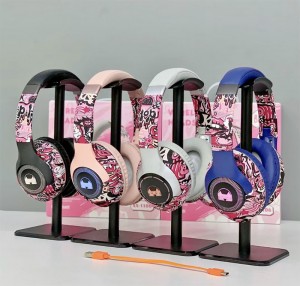
Regional gaming cultures and aesthetic preferences vary drastically worldwide, and localized color and appearance customization significantly improves market acceptance. East Asian markets (China, Japan, South Korea) favor vibrant, trendy, and diverse color schemes, including anime-themed designs, macaron gradients, and dual-color splicing to align with local youthful gaming culture.
European and American consumers prefer minimalist, high-texture industrial aesthetics, favoring matte black, pure white, and dark gray low-saturation colorways. Premium matte finishing and metal wire-drawing textures deliver a sophisticated, understated luxury that matches local high-end consumer tastes. Emerging youth-dominated markets across Southeast Asia and South America thrive on bold neon color contrasts and trendy graffiti styles that complement vibrant local gaming subcultures.
High-end customized product lines can incorporate detachable decorative ear cup faceplates, enabling users to swap personalized patterns and styles freely. This innovative design enhances product playability, expands accessory sales potential, and further strengthens product market competitiveness and user stickiness.
Procurement Strategy Summary for Custom Gaming Headset Development
In the fiercely competitive global custom gaming headset industry, B2B brand owners, wholesale distributors, and private-label clients can break free from homogenized price competition and achieve sustainable profitable sales through refined customization across six core dimensions: professional-grade audio quality, ultra-low latency performance, high-end microphone functionality, adaptive ergonomic comfort, full cross-platform compatibility, and exclusive brand aesthetic design. Unlike generic one-size-fits-all gaming headsets, premium custom products balance professional esports performance, global user adaptability, regional market demands, and unique brand characteristics.
From a commercial procurement and bulk development perspective, superior audio performance and ultra-low latency serve as the core hardware advantages for capturing professional esports consumer groups. High-performance noise-canceling microphones and all-day ergonomic comfort enhance casual user satisfaction and minimize after-sales operational risks. Comprehensive cross-platform compatibility maximizes global market coverage, while exclusive brand aesthetic customization builds long-term brand barriers and supports premium product positioning.
By implementing differentiated customization standards tailored to regional gaming habits, climatic conditions, and aesthetic preferences, B2B buyers can develop high-margin, low-return, high-reputation custom gaming headsets that outperform mainstream generic products. Brands seeking to launch exclusive private-label headset lines and scale bulk wholesale operations require standardized, professional custom manufacturing support. To explore bulk-production solutions for your ideal headset line, check our bulk custom gaming headset manufacturing service for one-stop hardware customization support.
Private Label Gaming Headsets for Brands & Wholesalers Only
We manufacture custom wireless gaming headsets in bulk with low MOQ, full OEM/ODM support, and exclusive branding — for businesses, not individual shoppers.
Recommend Reading
Post time: Jun-14-2026