Against the booming global gaming peripheral market, countless cross-border sellers and private label brand owners struggle with a core confusion: whether it is worthwhile to allocate capital to develop and bulk-source wireless gaming headset product lines instead of sticking to mature wired headset SKUs.
Unlike ordinary consumer buying guide articles introducing product usage, this guide stands entirely on the B-side brand planning and procurement perspective, combining global market consumption data, component cost accounting, after-sales statistical data, and regional market differences to analyze the real value and potential hidden risks of wireless gaming headsets. This content answers core search queries, including whether wireless headsets are good for gaming, whether wireless gaming headsets are worth it, and the feasibility of wireless gaming headset investment.
Market demand is the primary precondition to judge whether wireless gaming headsets deserve private label investment. In the past five years, global wireless gaming headset shipments have maintained a compound annual growth rate of 18.7%, while the wired gaming headset market has incrementally shrunk to below 4% per year. Such an obvious market shift originates from end-users’ changing gaming habits and regional consumption differences, directly guiding private label brands’ product layout logic.
1. Global Market Demand Trend: Fundamental Basis to Evaluate Wireless Headset Investment
1.1 End-user Consumption Shift: From Wired Dominance to Wireless Preference
Ten years ago, wired gaming headsets occupied over 90% global market share, relying on zero-latency stable performance for esports gameplay, but modern gamers’ diversified usage scenarios break this fixed market structure. Modern gaming users no longer only use headsets for fixed-desk PC esports; they frequently switch between bedroom console gaming, sofa mobile battle royale gaming, and outdoor portable audio entertainment.
Wired headsets’ fixed cable limitation cannot satisfy multi-scenario flexible usage, making more consumers turn to wireless alternatives. Global Amazon, eBay, and AliExpress big data shows wireless gaming headset search volume grows 32% year-on-year, proving end-users’ clear preference shift, which creates stable market foundation for private label wireless headset bulk development.
1.2 Regional Market Segmentation for Differentiated Private Label Layout
Different global regions have completely divergent demand preferences for wireless gaming headsets, which determines private label brands’ targeted investment proportion. North America and Western Europe's mature gaming markets have high acceptance of mid-to-high-end wireless headsets: local consumers prioritize wire-free convenience and multi-device linkage, over 65% offline gaming store bestsellers are wireless models, so private label sellers can focus on high-margin dual-mode wireless SKUs here.
Southeast Asia, Latin America, and Eastern Europe emerging gaming markets are dominated by cost-sensitive casual mobile gamers, entry-level affordable wireless headsets with basic Bluetooth function occupy mainstream sales volume, suitable for private labels’ low-cost mass wholesale layout. The Middle East market prefers mid-range wireless headsets with long battery life, becoming a niche high-profit segmentation for brand buyers to develop exclusive customized lines. Clear regional segmentation lets brands avoid blind full-market investment and allocate production funds precisely.
2. Core Competitive Advantages That Justify Private Label Bulk Development
From private label brands’ profit and market expansion perspective, qualified customized wireless gaming headsets own three irreplaceable competitive advantages that wired products cannot match, which is the core reason why most top gaming peripheral brands have continuously expanded wireless product portfolios in recent years.
2.1 Mobility & Multi-scenario Usage Bring Higher Product Premium Margin
The biggest intrinsic advantage of wireless gaming headsets is cable-free mobility, which creates extra premium space for private label products. Same hardware configuration level: wireless gaming headsets can set 25%~40% higher retail price than wired counterparts on mainstream e-commerce platforms, and the premium will further expand for customized private label models.
For example, a set of mid-range specification wired headsets costs $8.2 for bulk procurement, the corresponding dual-mode wireless version’s procurement cost is $11.5, but its average retail selling price can reach $29.99 versus the wired’s $19.99, bringing nearly 120% gross profit margin improvement for cross-border sellers. Users are willing to pay an extra premium for wireless freedom during couch gaming, travel, and mobile gameplay, forming a stable profit source for private label brands. At this part, you can obtain detailed parameter configuration via our 2.4G wireless gaming headset OEM customization service to match your target market’s premium positioning demand.
2.2 Cross-device Compatibility Expands Wholesale Market Coverage
Most standardized customized wireless gaming headsets support seamless connection with PC, PlayStation, Xbox, Switch, and all mainstream smartphones via dual 2.4G+Bluetooth transmission, while wired headsets rely on 3.5mm or a single USB interface with limited device compatibility.
For wholesale distributors cooperating with multi-category offline retailers and multi-platform e-commerce stores, one wireless SKU can cover more end-user groups than two or three differentiated wired SKUs, greatly reducing brands’ SKU management cost and warehouse inventory pressure. When negotiating bulk orders with downstream wholesalers, multi-device compatible wireless headsets have a higher order success rate, effectively expanding brands’ global wholesale coverage and order scale.
3. Hidden Drawbacks & Production Risks That Restrict Blind Mass Production
Although wireless gaming headsets have obvious market advantages, blind bulk production without standardized component control will trigger serious after-sales loss and inventory backlog, which is the core factor making partial small private label brands quit the wireless market. The two most fatal risks come from the latency flaw and unstable battery quality of low-cost wireless designs.
3.1 Latency Defect of Pure-Bluetooth Low-cost Wireless Solutions
Many novice private label buyers pursue ultra-low procurement costs and select single Bluetooth-only wireless modules without an independent 2.4G chip, which becomes the top reason for product negative reviews and returns. Ordinary Bluetooth 5.0~5.3 modules generate 80~150ms audio transmission latency, causing serious audio-video desync during fast-paced FPS and battle royale gaming; end-users can clearly feel delayed footsteps and gunfire sound, leading to over 35% product return rate for such low-cost wireless headsets on cross-border e-commerce.
Only a 2.4G dedicated gaming wireless module can control latency below 30ms to satisfy competitive gaming demand, which means cutting cost on the core wireless chip equals sacrificing product core competitiveness and brand long-term reputation.
3.2 Battery Durability & After-sales Maintenance Hidden Cost
Built-in lithium battery is another hidden cost point ignored by many inexperienced bulk buyers. Inferior low-capacity lithium cells lead to short continuous playback life, frequent abnormal power drop, and even sudden shutdown during gaming; according to factory after-sales data, wireless headsets equipped with unqualified batteries have 28% higher after-sales repair rate than wired counterparts.
Besides the replacement cost of defective batteries, cross-border sellers also need to bear international return logistics expenses and platform compensation penalty triggered by poor battery performance, which may swallow all product gross profit in serious cases. Only selecting grade A customized lithium batteries with fixed capacity specification can control after-sales risk within an acceptable range, inevitably raising the basic procurement cost of qualified wireless SKUs.
4. Tiered Cost & Profit Margin Data for Private Label Product Line Planning
Scientific tiered cost planning is the core of judging whether the wireless headset project can realize stable profit; we divide private label wireless gaming headsets into entry, mid-range, and high-end three grades with clear component cost allocation and profit calculation for cross-border buyers’ reference.
4.1 Component Cost Allocation for Entry/Mid/High-end Wireless SKUs
Entry-level Bluetooth-only wireless headset (target Southeast Asia & South America mass market): total bulk unit cost $5.3~$6.8, main cost proportion: Bluetooth module 32%, plastic shell & structure 28%, battery 18%, speaker driver 15%, packaging & private label printing 7%; suitable for budget private label sellers focusing on low-price large-quantity wholesale.
Mid-range dual-mode 2.4G+Bluetooth wireless headset (mainstream Europe & North America bestseller): unit cost $10.9~$13.6, core cost focuses on imported low-latency 2.4G chip (38% of total cost), grade A 800mAh lithium battery (22%), ergonomic ear cushion and RGB structure (21%), the most cost-effective profit model for mainstream private label brands.
High-end esports customized wireless headset: unit cost $18.2~$24.7, adopts a professional spatial audio chip, a large-capacity 1200mAh lithium battery, and a metal shell, oriented to high-end esports stores and boutique retail channels with over 150% gross profit margin. You can match your tiered product budget via our private label wireless headset bulk sourcing service for targeted component matching.
4.2 Profit Gap Between Wireless vs Wired Gaming Headset Bulk Orders
From wholesale channel profit comparison: entry-level wireless gross profit per unit is $2.1~$2.8 versus wired’s $1.2~$1.7; mid-range wireless gross profit reaches $7.5~$10.2 while corresponding wired only gets $3.8~$5.1; high-end customized wireless’s single-unit profit can exceed $16, far surpassing wired high-end’s $7~$9 profit level.
Even after deducting extra battery and wireless chip procurement costs, qualified wireless SKUs still own an obvious profit advantage, explaining why mature private label brands gradually shift core product resources to wireless layout year by year.
H2 5. Targeted Customization Strategies to Boost ROI of Wireless Private Label Lines
For brands confirming to invest in a wireless gaming headset project, targeted hardware and appearance customization are the key to avoiding homogenized price competition and lifting long-term product ROI; all customization plans are formulated around B-side procurement and market sales demand.
5.Dual-Mode (2.4GHz + Bluetooth) Hardware Customization Standards
Wireless gaming headsets live or die by connection quality — especially for private label brands competing on performance and value. A single Bluetooth connection can no longer satisfy both competitive gamers and casual users. That's why dual-mode hardware customization has become a baseline requirement for any serious private label gaming headset line.
5.1Dual-mode(2.4G+Bluetooth) Hardware Customization Standard
We suggest all mainstream private label wireless gaming headsets adopt mandatory dual-mode customization: independent 2.4G RF wireless for zero-latency professional gaming and standard Bluetooth for daily mobile media playback, perfectly covering competitive esports and casual entertainment two core usage scenes simultaneously.
For entry-level budget lines, retain basic dual-mode function but simplify RGB lighting and ear cushion material to control cost; for high-end customized lines, add hardware spatial audio chip and a detachable noise-canceling microphone to raise product added value and support premium pricing. Avoid single-Bluetooth design except ultra-low-cost exclusive emerging market customized SKUs to reduce return risk fundamentally.
5.2 Brand-exclusive Appearance Customization for Market Differentiation
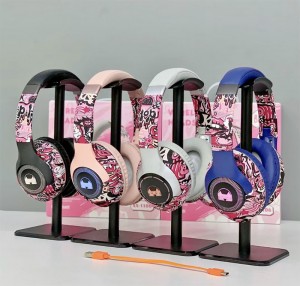
Homogenized shell design is the main cause of vicious price competition in the wireless headset market, so private label exclusive appearance customization becomes an essential investment item. Brands can customize exclusive ear cup molds, unique RGB dynamic lighting modes, and personalized LOGO craft, including laser engraving, UV full-color printing, and emboss molding according to their own brand VI standard.
For regional market targeted customization: anime co-branded color matching for the East Asian market, minimalist matte industrial design for the European market, bold neon colorway for the North American youth market. Exclusive customized appearance lets products get out of the identical generic headset queue and build an exclusive brand barrier to support long-term premium sales.
6. Final Decision-making Checklist for Cross-border Sellers & Private Label Brands
After analyzing market demand, cost, risk, and customization, we summarize clear decision rules for B-side buyers to judge wireless headset investment feasibility:
Prioritize developing mid-range dual-mode wireless SKUs if your core sales channel focuses on North America, Europe, mainstream e-commerce, and offline gaming retail; such products offer balanced cost, profit, and market acceptance with the lowest comprehensive investment risk.
Only launch entry-level single-Bluetooth wireless lines when your target market is Southeast Asia, Latin America, low-consumption mass market, strictly control component standard to avoid excessive after-sales loss from inferior accessories.
Postpone large-batch wireless production temporarily if your brand’s core customer group is professional esports clubs and fixed-desk hardcore FPS gamers, keep wired high-performance SKUs as the core product, and test small-batch high-end customized wireless samples for market verification first.
Overall, wireless gaming headsets are worthy of targeted private label development for most cross-border sellers and brand clients as long as buyers control core hardware standards and match tiered customization to regional market demand; qualified dual-mode wireless products can bring a higher profit margin and wider market coverage than traditional wired headsets, becoming a core growth point of the brand’s gaming peripheral portfolio. Blind low-cost single-Bluetooth mass production is the only wrong investment choice to avoid.
For brands ready to launch formal private label wireless headset lines and bulk sourcing, explore our custom wireless gaming headset wholesale solutions to get one-stop OEM customization support covering hardware parameters, appearance design, and tiered cost matching.
Private Label Gaming Headsets for Brands & Wholesalers Only
We manufacture custom wireless gaming headsets in bulk with low MOQ, full OEM/ODM support, and exclusive branding — for businesses, not individual shoppers.
Recommend Reading
Post time: Jun-14-2026