As wearable technology evolves, AI smart glasses are emerging as one of the most exciting frontiers. These instruments combine optics, sensors, cameras, and on-device intelligence to overlay digital information, assist with translations, or even act as hands-free assistants. In 2025, the options are growing fast — but which ones strike the right balance between performance, usability, and price? In this guide, we’ll explore what are AI smart glasses, how they work, what they do, and review the best AI smart glasses 2025 on the market.
What Are AI Smart Glasses?
Before comparing models, it's essential to understand the definition and core capabilities behind these devices.
At their core, AI smart glasses(or AI-powered smart glasses) are eyewear equipped with optical hardware (lenses, sometimes displays), sensors (camera(s), IMU, microphones, etc.), compute electronics (processors, memory), and software (AI algorithms). The AI can run locally on the glasses, in a companion smartphone, or in the cloud.
Key characteristics that distinguish them from “dumb” smart glasses include:
On-device intelligence or integration with AI assistants
The glasses can interpret image data, voice commands, or sensor data and respond intelligently (e.g. object recognition, translation, notifications).
Contextual adaptation
They adjust what they display or announce based on what you are seeing or doing.
Sensor fusion
They combine inputs from multiple sensors (camera, accelerometer, gyroscope, magnetometer) to interpret and react to user actions.
In short, AI smart glasses aim to become an always-on, heads-up interface to intelligent systems.
What Do AI Smart Glasses Do?
AI smart glasses can perform a wide variety of functions, depending on their hardware and software. Below is a summary of common functionalities:
1. Notifications & Heads-Up Display (HUD)
Some smart glasses project notifications, messages, or status cues into the wearer’s field of vision. This is especially useful when the glasses incorporate an in-lens display. For instance, Meta Ray-Ban Display offers an in-lens display for messages, AI responses, translations, and mapping overlays.
2. Photography, Video, and Live Streaming
Many glasses include a camera for first-person capture. You can record video, take snapshots, or even broadcast live to social media platforms. The newer models often optimize this with stabilization, zoom, or AI-based scene recognition.
3. Voice Assistant & AI Interaction
With built-in microphones and speakers, smart glass wearers can invoke assistants (e.g. Meta AI, Alexa) by voice. They can then ask questions, dictate messages, or control connected devices.
4. Real-Time Translation & Captioning
One of the more powerful use cases: live translation or closed captions during a conversation. When you wear the glasses, spoken words (or text) in another language appear as translated text in your field of view.
5. Object Recognition & Contextual Information
Some systems can identify objects, landmarks, or even faces (if privacy policies permit) and overlay relevant data — for example, product info when you look at an item in store.
6. Augmented Reality (AR) Overlays
Higher-end models with displays can overlay graphics or digital content on the real world—for instance, navigation arrows in your field of vision or informational labels on physical objects.
7. Health & Fitness Metrics
In specialized models, AI smart glasses may monitor metrics like head motion, walking patterns, or eye tracking, or integrate with fitness platforms to display real-time health data.
8. Adaptive Optics / Prescription Adjustment
Some smart glasses allow prescription lenses to be incorporated or offer adaptive optics that adjust focus automatically for different distances.
Hence, “smart glasses with camera and AI” or “smart translation glasses”are terms often used to emphasize particular feature sets of these devices.
How Do AI Smart Glasses Work?
To understand how AI smart glasses function, it helps to break down their internal architecture and workflow.
Hardware Components
● Camera(s):Usually one or two cameras capture the wearer’s field of view.
● Display or HUD (if included): Some models embed a micro-display in the lens or a transparent display overlay.
● Sensors:IMUs (accelerometer, gyro), magnetometers, ambient light sensors, sometimes eye tracking systems.
● Compute Module: A processor (often low-power, specialized for AI/vision workloads) with memory and storage.
● Connectivity:Bluetooth, Wi-Fi, or sometimes cellular modules.
● Audio & Microphone:Open-ear speakers or bone conduction, plus microphones for voice input.
● Power & Battery: Batteries sized to balance weight and longevity, often with external charging cases.
Software & AI Pipeline
1. Perception / Sensing
Cameras and sensors continuously capture raw data—images, motion, orientation.
2. Preprocessing
Raw sensor data is filtered, stabilized, and corrected (e.g. lens distortion correction).
3. AI Inference / Analysis
The system may run models locally (or offload to a paired device/cloud) to detect objects, faces, text, gestures, or context.
4. Decision / Logic Layer
The system decides what to display or announce based on detected context. For example, it might overlay translation text or show notification prompts.
5. Output / Rendering
Visual output is projected onto the display, and audio output is played. Haptic or gesture feedback may also be used.
6. User Input / Control
The user can interact via voice commands, touchpads on frames, gestures, or even eye gaze detection. For example, sEMG wristbands (like Meta’s Neural Band) interpret muscle signals to control the UI.
7. Power & Resource Management
Because battery life is limited, smart glasses must dynamically manage which sensors or modules are active. Cutting-edge research, like EgoTrigger, uses ambient audio cues to selectively power the camera only when needed, conserving energy.
Moreover, gesture recognition methods like Helio aim to enable ultra low-power hand gesture interactions for always-on wearable systems.
Thus, smart glasses combine hardware, firmware, and AI systems to deliver seamless, contextual experiences.
Best AI Smart Glasses 2025: Top Picks & Comparisons
Here are some of the standout models in 2025, judged on features, performance, and innovation.
1. Meta Ray-Ban Display
● Why it stands out: It is Meta’s first mainstream glasses with a **built-in display**, allowing visual responses from Meta AI, live captions, navigation overlays, message previews, and more.
● Specs: 12MP camera, micro-display in right lens (600×600 px, ~20° FOV), Qualcomm Snapdragon AR1 Gen1, open-ear speakers, 32 GB internal storage.
● Price: Priced at $799 (includes Neural Band) at launch.
● Battery: Up to ~6 hours of mixed use (with extra from charging case).
● Key features: Real-time AI responses, live translation and captions, display overlays, gesture control via Neural Band.
2. Ray-Ban Meta (Gen 2 and earlier models)
● Why consider it:This line focuses on audio, camera, and AI without a full display, maintaining lighter weight and simpler integration.
● Features:12MP camera, voice commands (Meta AI), open-ear audio.
● Prescriptions & optics: The frames support prescription lenses.
● Pricing: In various retailer listings, Ray-Ban Meta glasses show up in the $300–$400** range (depending on model and lens options).
3. Solos AirGo / Solos AirGo V
● Why it stands out:It integrates **ChatGPT-4 (or similar LLM) for advanced multimodal AI interactions.
● Use case:More oriented toward power users who want deep AI interaction and contextual awareness.
4. Xreal / Rokid / AR Display Glasses
● Xreal Air 2 Ultra, Rokid AR Max 2, RayNeo — these are more AR or display-focused: they prioritize rendering a virtual screen or overlaying digital content.
● They are ideal if you need immersive visual overlays (movies, large virtual screens) rather than just simple notifications.
5. Brilliant Labs Frame
● Developed by Brilliant Labs, a Singapore-based company focusing on open-source AI eyewear.
● Key emphasis on blending in with normal eyewear (including support for prescription lenses) and providing voice/AI assistant functionality.
6. Specialty / Niche Devices
● Glasses focusing on translation, hearing augmentation, or medical use.
● Nuance Audio** (for instance) blends hearing-assist functionality with smart features.
● Some smart translation glasses emphasize live transcription and language overlay.
● Research prototypes like ElectraSight integrate eye tracking to deliver subtle UI control and health monitoring.
7. Wellyp Audio AI Smart Glasses (OEM/ODM)
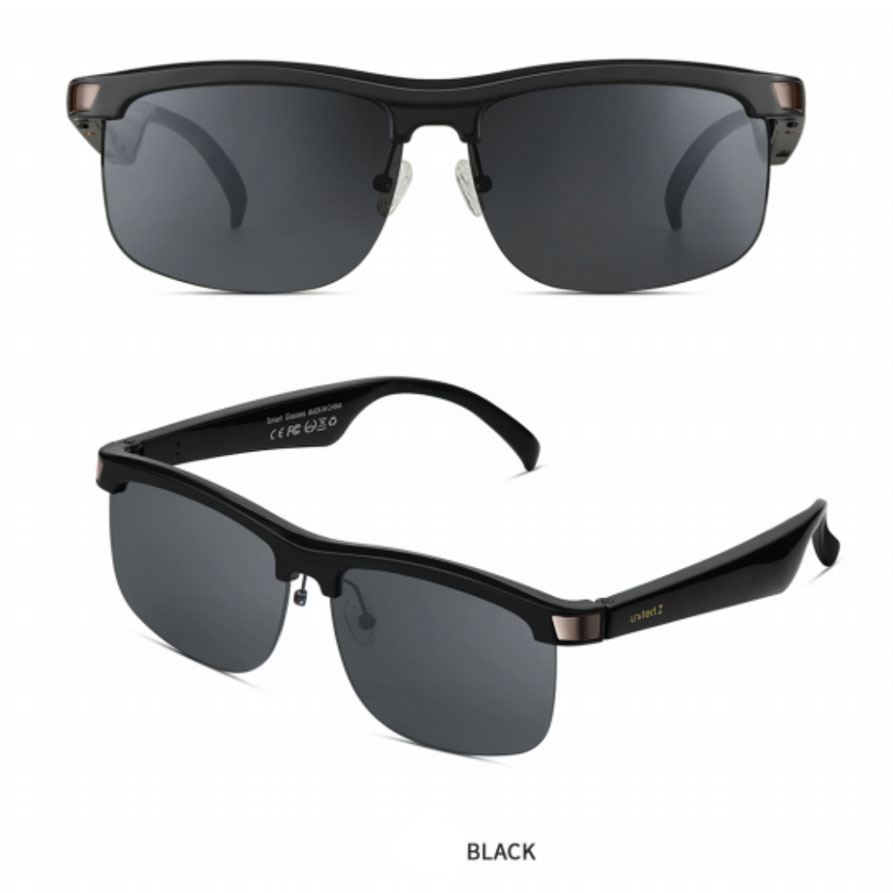
For businesses looking for AI smart glasses China suppliers or private-label solutions, Wellyp Audio is a trusted AI smart glasses company with years of export experience.
Expertise: Specializes in AI smart wearable glasses with camera, translation, and Bluetooth connectivity.
Customization: Offers full OEM/ODM services, including logo printing, custom packaging, and firmware integration to match your brand’s user experience.
Global Clients: Successfully serves partners in Europe, North America, and worldwide who want to launch their own best smart AI glasses under private label.
Price Advantage: Competitive AI smart glasses price without sacrificing quality — ideal for wholesalers, retailers, and tech startups.
How to Choose the Best AI Smart Glasses 2025
Given the variety, here are criteria and trade-offs to consider:
1. Display vs Non-Display
● Display-equipped glasses (like Ray-Ban Display) provide richer feedback but cost more, draw more power, and may be heavier.
● Audio/camera-first glasses (e.g. Gen 2 Ray-Ban Meta) remain lightweight and more battery-friendly.
2. Camera & Optical Quality
Look for resolution, image stabilization, field-of-view, and lens clarity. If you intend to capture video or scan surroundings, this is critical.
3. Battery Life
Battery is a major constraint. Real-world usage (display, AI, sensors) drains power fast. Always check mixed usage runtime and charging options (e.g. charging case).
4. AI / Software Ecosystem
A capable hardware is only as good as its AI backend. Evaluate what kinds of AI features (translation, image recognition, assistant integration) are supported and how they are updated over time.
5. Ergonomics & Comfort
Weight, balance, frame size, and fit are especially important, because glasses stay on your face all day.
6. Prescription Support & Optical Flexibility
If you wear corrective lenses, make sure the smart glasses either support prescription lenses or offer adjustable optics. Terms like “ai smart glasses adjust to prescription” are becoming important for everyday usability.
7. Connectivity & Compatibility
Make sure they pair cleanly with your smartphone, OS, and apps (iOS, Android, etc.).
8. Price & Value
The keyword“AI smart glasses price is crucial: only buy if the feature set justifies it. Some models are still experimental or premium-priced.
9. Brand, Quality & After-Sales Support
Consider reputable **AI smart glasses brands** or companies. Also, note the rise of **AI smart glasses in China**, where many OEMs and startups produce competitive models. A strong support ecosystem ensures firmware updates, repairs, and longevity.
Frequently Asked Questions
Q: What are AI smart glasses?
A: AI smart glasses are wearable eyewear devices that integrate sensors, cameras, display elements (or audio), and AI software to deliver real-time contextual information, visual overlays, voice assistance, translation, and more. Essentially, they serve as a heads-up interface combining optics and intelligence.
Q: How do AI smart glasses work?
A: They capture environmental data through cameras and sensors, process it via AI pipelines, and present computed outputs (text, graphics, audio) to the user. Input methods include voice, touch, gestures, or eye tracking.
Q: What does AI smart glasses price look like?
A: Expect to pay in the mid-hundreds to high-hundreds USD range. For example, Ray-Ban Display launched at $799. Other models without display (e.g. Ray-Ban Meta) may cost $300 to $400, depending on optics options. Conact with Wellypaudio, you can get the more competitive and affordable price for OEM/ ODM AI translation glasses series.
Q: Do AI smart glasses with camera exist?
A: Yes—many leading models include cameras. In fact, camera-based features like image capture, object recognition, and video are foundational to most smart glasses. Terms like“smart glasses with camera and AI” emphasize those models.
Q: Do AI-powered smart glasses adjust to prescription?
A: Yes, the best smart AI glasses support prescription lenses or accommodative designs. For example, Ray-Ban Meta supports prescription options.
Q: What are AI smart translation glasses?
A: These are glasses that integrate real-time speech/text translation features. The wearer hears or sees translated text in their language overlaying the foreign speech or signage. This is a compelling use case of AI smart glasses.
Q: Are there AI Bluetooth smart glasses?
A: Yes — most consumer smart glasses include Bluetooth to connect to a smartphone or audio device. This is how many rely on a companion app or offloading AI tasks. Hence “AI Bluetooth smart glasses’’ is a valid descriptor.
Wellypaudio AI Smart Glasses (OEM/ODM)
Why it stands out: Wellypaudio is a professional manufacturer and OEM/ODM supplier based in China, specializing in custom AI smart glasses for B2B partners worldwide.
Customization Capabilities:
Support for AI Bluetooth smart glasses with camera, translation, and prescription lens options.
Tailored designs for branding, wholesale, and corporate orders.
Firmware customization, including AI voice assistant integration and brand-specific UI/UX.
Ideal For: Retailers, e-commerce brands, and tech startups who want to launch their own AI smart wearable glasses under a private label.
Advantage: Competitive pricing, strong R&D support, and proven export experience to Europe, North America, and global markets.
The era of AI smart glasses is rapidly advancing. In 2025, leaders like Meta Ray-Ban Display, Solos AirGo, and Brilliant Labs are pushing boundaries — but businesses seeking private-label solutions have an exciting opportunity too.
Wellypaudio stands out as a professional AI smart glasses manufacturer and supplier in China, offering OEM/ODM solutions for global brands. If you want to bring your own smart glasses with AI to market — whether for translation, camera capture, or enterprise use — partnering with Wellyp Audio ensures quality production, customization flexibility, and competitive pricing.
By carefully considering your needs and choosing the right partner, you can find the best AI smart glasses 2025 that deliver both innovation and value.
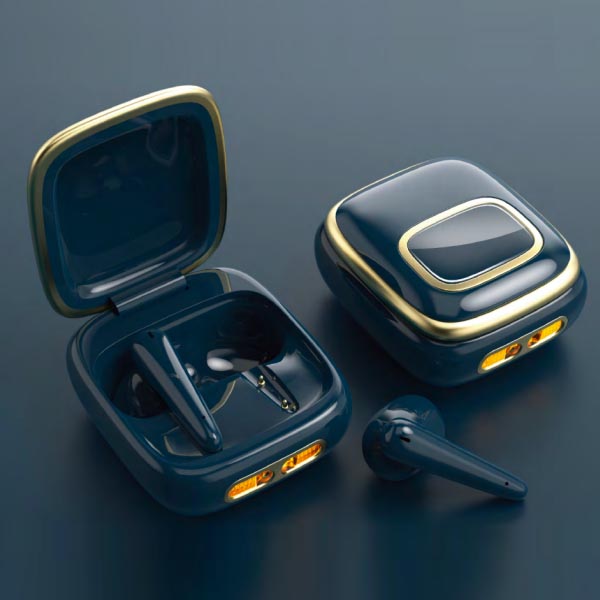
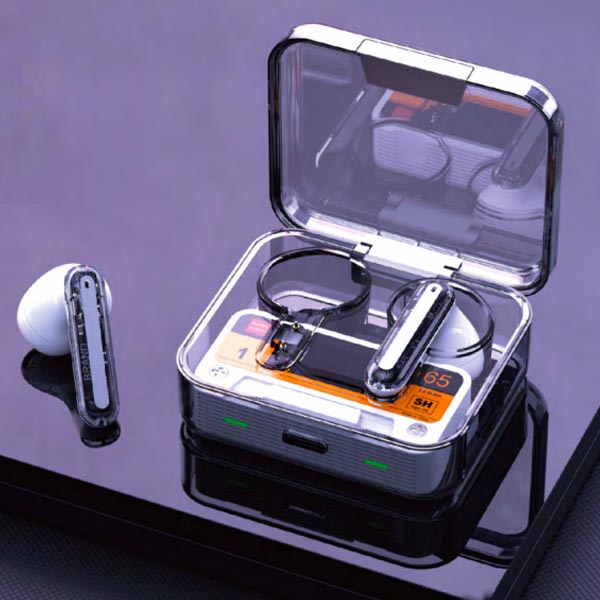
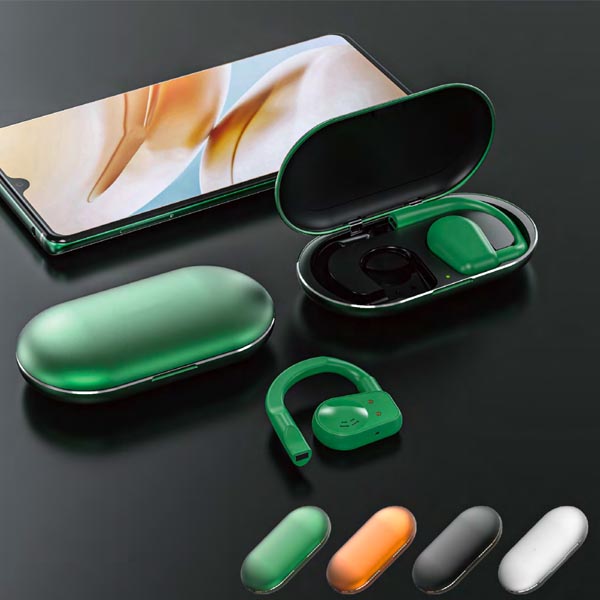
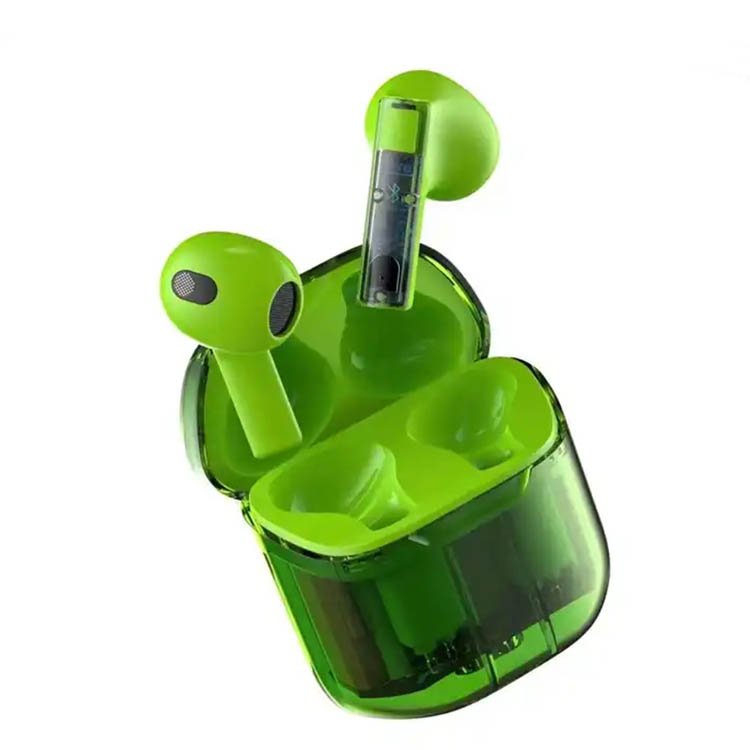
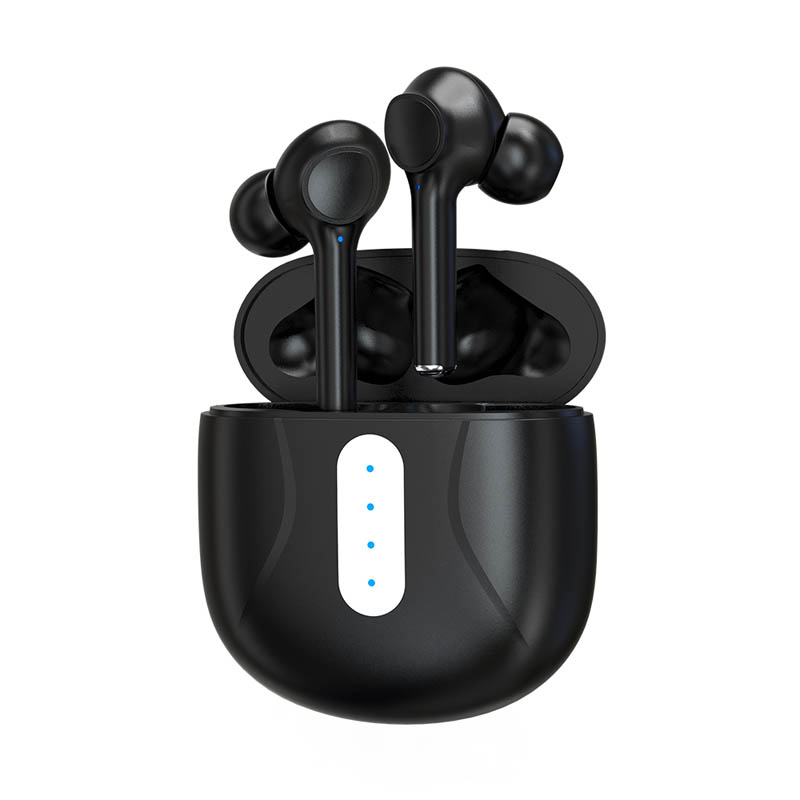
OEM earbuds are a powerful way for brands to deliver unique products to their customers, stand out from competitors, and build long-term loyalty. By partnering with a professional headphone factory like Wellyp Audio, you gain access to R&D expertise, advanced manufacturing, and global shipping support.
If you are looking for a reliable partner for OEM earphones, headphone supplier services, or manufacturing earphones for your next product line, contact Wellypaudio today and let’s build your brand’s next bestseller.



Recommend Reading
Post time: Oct-06-2025